
How to Plan a Wedding That Feels Expensive (Without the Price Tag)
Let me guess: you have a vision for your wedding—moody, romantic, beautifully designed—but the budget isn't matching up with what you're seeing in your head.
Here's the truth the wedding industry doesn't want you to hear: you don't need an unlimited budget to create a wedding that feels luxurious and intentional. You just need to be strategic about where you spend.
I've designed weddings at every budget level, and the ones that feel most expensive aren't always the ones with the biggest price tags. They're the ones where every dollar is spent on purpose.
Here's how to make your budget work harder—and smarter.

Get Crystal Clear on Your Priorities (Before You Spend a Dime)
Most couples skip this step and then wonder why they're stressed about money three months before the wedding.
Before you book anything—before you even look at venues—sit down with your partner and get honest about what actually matters to you.
Not what you think you're "supposed" to care about. Not what your mom says you need. What will make your wedding feel like yours?
Is it the photography? The food? The atmosphere and design? Live music? An open bar?
Once you know your top 3 priorities, you allocate accordingly. Maybe 40% of your budget goes to those three things, and everything else gets what's left. That's how you create a wedding that feels expensive in the ways that matter to you—without blowing your budget on things you don't actually care about.
This is permission to skip the things that don't resonate. You don't need chair covers, elaborate centerpieces, or a videographer if those aren't your priorities. Spend where it counts.
Set a Realistic Budget (And Actually Stick to It)
I know this sounds obvious, but most couples set a budget and then immediately ignore it the second they fall in love with something.
Here's how to do this properly:
Start with the total number you can actually afford to spend. Not what you wish you could spend. Not what you'll put on credit cards and figure out later. What you can realistically spend without financial stress.
Then break it down by category:
Venue & catering (usually 40-50% of total budget)
Photography/videography (10-15%)
Design, florals, rentals (10-15%)
Attire (5-10%)
Entertainment (5-10%)
Stationery, favors, miscellaneous (5-10%)
Contingency fund (always 10% for unexpected costs)
Research average costs in Toronto so you're working with real numbers, not fantasy pricing. If your budget is $30K and venues alone are running $20K, you need to adjust expectations or find creative solutions.
And once you set the budget? Treat it like a boundary, not a suggestion.
Track Every Single Dollar (Yes, Even the Small Stuff)
This is the unglamorous part no one talks about, but it's the difference between staying on budget and going $10K over.
Use a spreadsheet, a budgeting app, or even a notebook—I don't care what system you use as long as you use one. Record every deposit, every payment, every tiny expense.
Those $50 Etsy purchases add up. The extra rentals you didn't originally plan for add up. The "just one more" floral upgrade adds up.
When you can see exactly where your money is going in real-time, you catch overspending before it becomes a problem. You'll also identify areas where you have wiggle room to reallocate if something more important comes up.
This isn't about being restrictive—it's about being intentional. You want to know you're spending your money on things that actually enhance your wedding, not just filling space.
Be Flexible (But Not About Your Priorities)
Here's where a lot of couples get stuck: they want everything to go exactly as planned, and when reality doesn't match Pinterest, they panic and overspend trying to force it.
Flexibility is your friend when planning a wedding on a budget.
Maybe your dream venue is booked, but the second-choice venue has better food and saves you $5K. Maybe you wanted a Saturday in June but a Friday in May cuts your costs by 30%. Maybe you envisioned floor-to-ceiling florals, but a few statement arrangements create the same impact for half the price.
The key is knowing what you can be flexible about (logistics, specific dates, vendors) and what you can't (your priorities from step one).
If candlelit atmosphere is non-negotiable, you find a way to make that happen—even if it means cutting the cocktail hour short or skipping the dessert bar. But if you don't actually care about favors or programs, drop them without guilt.
Invest in What Creates Atmosphere
If there's one place to spend money strategically, it's on the things that transform how your wedding feels.
Lighting is the single most underrated budget item. Candlelight, uplighting, string lights—they create mood and intimacy in ways that décor alone can't. A venue with great natural light or moody built-in ambiance will do half the work for you.
Florals don't need to be everywhere, but they should be intentional. One lush, textured installation makes more impact than mediocre arrangements on every table.
Linens matter more than you think. The difference between standard polyester and luxurious velvet or linen tablecloths is the difference between "fine" and "wow."
Music sets the tone. Whether it's a DJ, a string quartet, or a carefully curated Spotify playlist, good music makes people feel something.
These are the details that create the experience—the ones guests remember, the ones that show up in photos, the ones that make your wedding feel elevated.
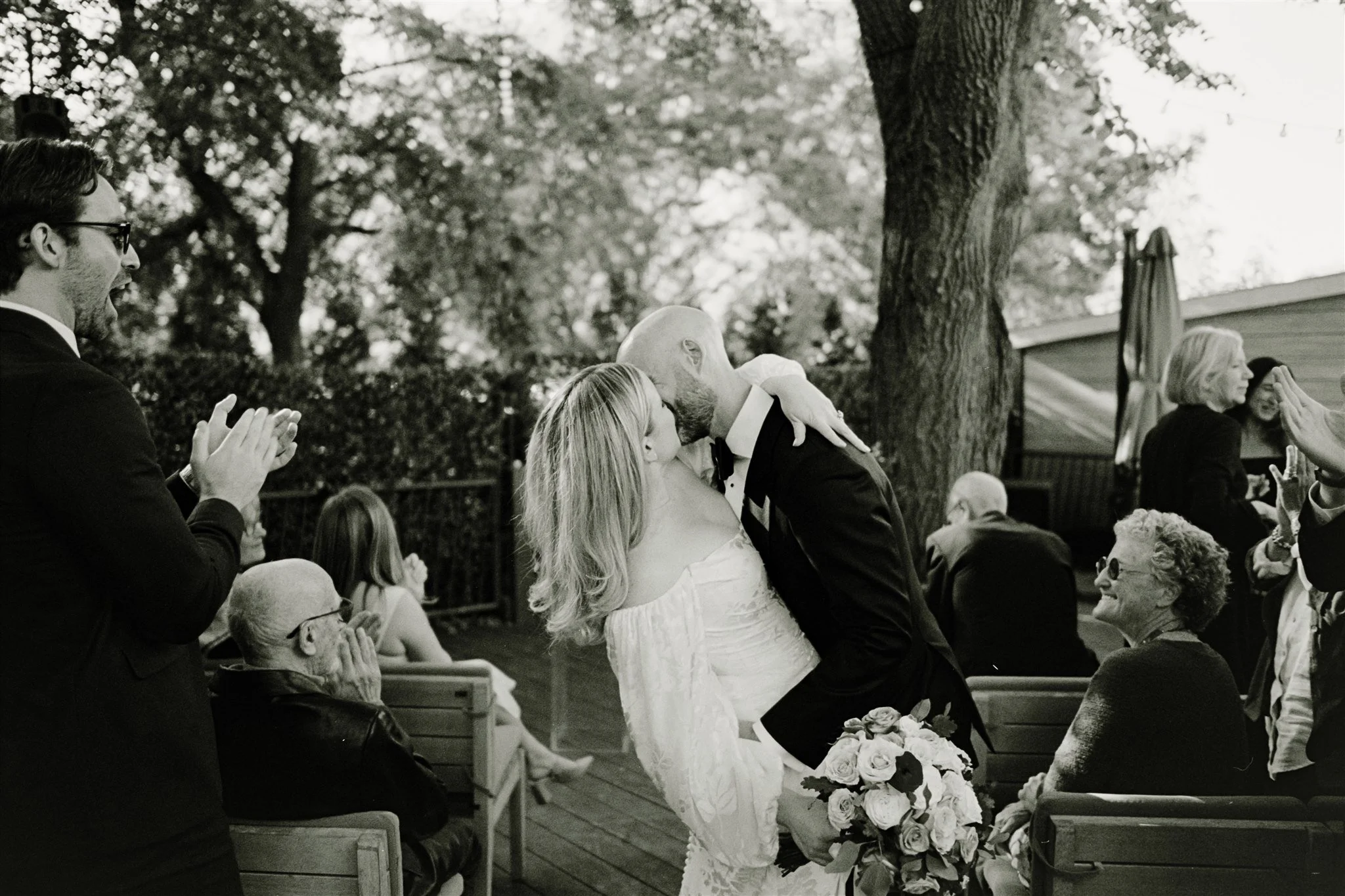
The Real Secret to a "Dream Wedding"
Here's what I've learned after years of doing this: the weddings that feel most like dream weddings aren't the ones with the biggest budgets.
They're the ones where couples knew what mattered to them and built everything around that. Where every detail felt intentional. Where the money was spent on creating an experience, not checking boxes.
You don't need to break the bank to have a beautiful wedding. You need clarity, intention, and the confidence to do it your way—not the way the industry tells you it "should" be done.
That's what I help couples do. Cut through the noise. Prioritize what matters. Create something that feels unmistakably theirs—without the financial stress.
Ready to plan a wedding that feels luxurious, intentional, and entirely you?
